Cedrus deodara himalaya
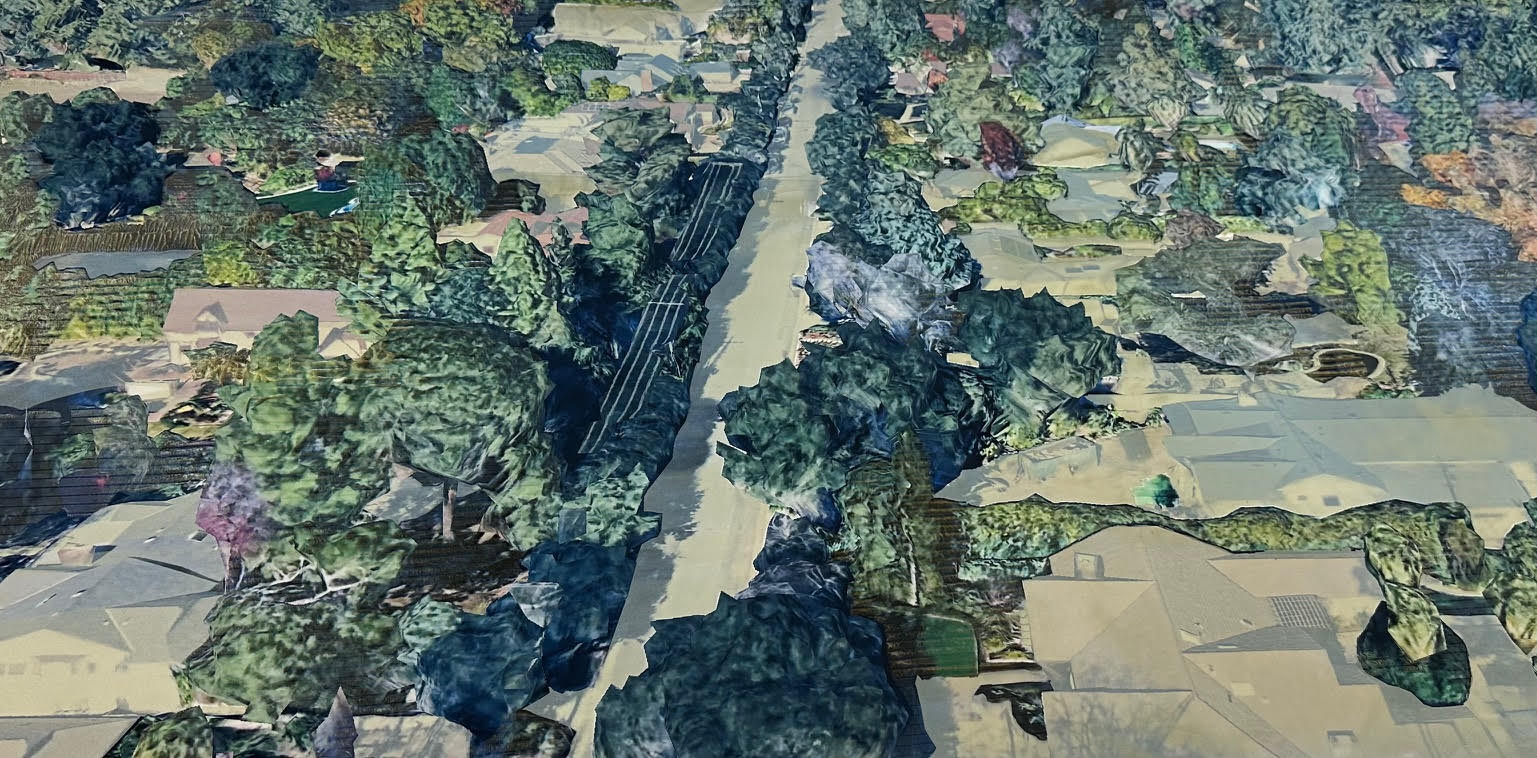
Alta Canyada Historic Deodar District, CA 34°13'05 N 118°12'54 W_Cedrus deodara_Himalayas_1913, 2025
23x48"
Digital inkjet print with screenprint
Deodar Cedars
The land where Los Angeles now stands holds deep layers of historical and cultural transformation. Alta Canyada Historic Deodar District in the La Cañada Flintridge is one such marker—a living artifact in California’s designed landscape. From a Google Earth view, this site appears as shades of green, seemingly benign. But each tree carries a story of botanical migration, settlement, and urban aspiration.
Native to the western Himalayas, the Deodar cedar was introduced into European cultivation in the early 1800s and arrived in the United States soon after. In Southern California, it became a symbol of landscape beautification, suburban comfort, and afforestation during the late 19th and early 20th centuries. Planted by early residents, civic groups, and developers, these trees brought imported aesthetic ideals into the region—shaping streets and neighborhoods with visions of beauty, order, and permanence.